Most objections are not a "no". They are a buyer telling you what is missing: a reason, a number, a person, or trust. The goal is not to win the argument, it is to find out which one, so you can keep going or move on cleanly.
A simple structure works for almost all of them:
- Acknowledge it without arguing ("That's fair").
- Ask one question to understand what is behind it.
- Answer the real concern, briefly, with something specific.
- Check that it landed before moving on.
Below are ten objections that come up in almost every B2B pipeline, with what they usually mean and a response you can adapt. Do not read them word for word; use your own voice.
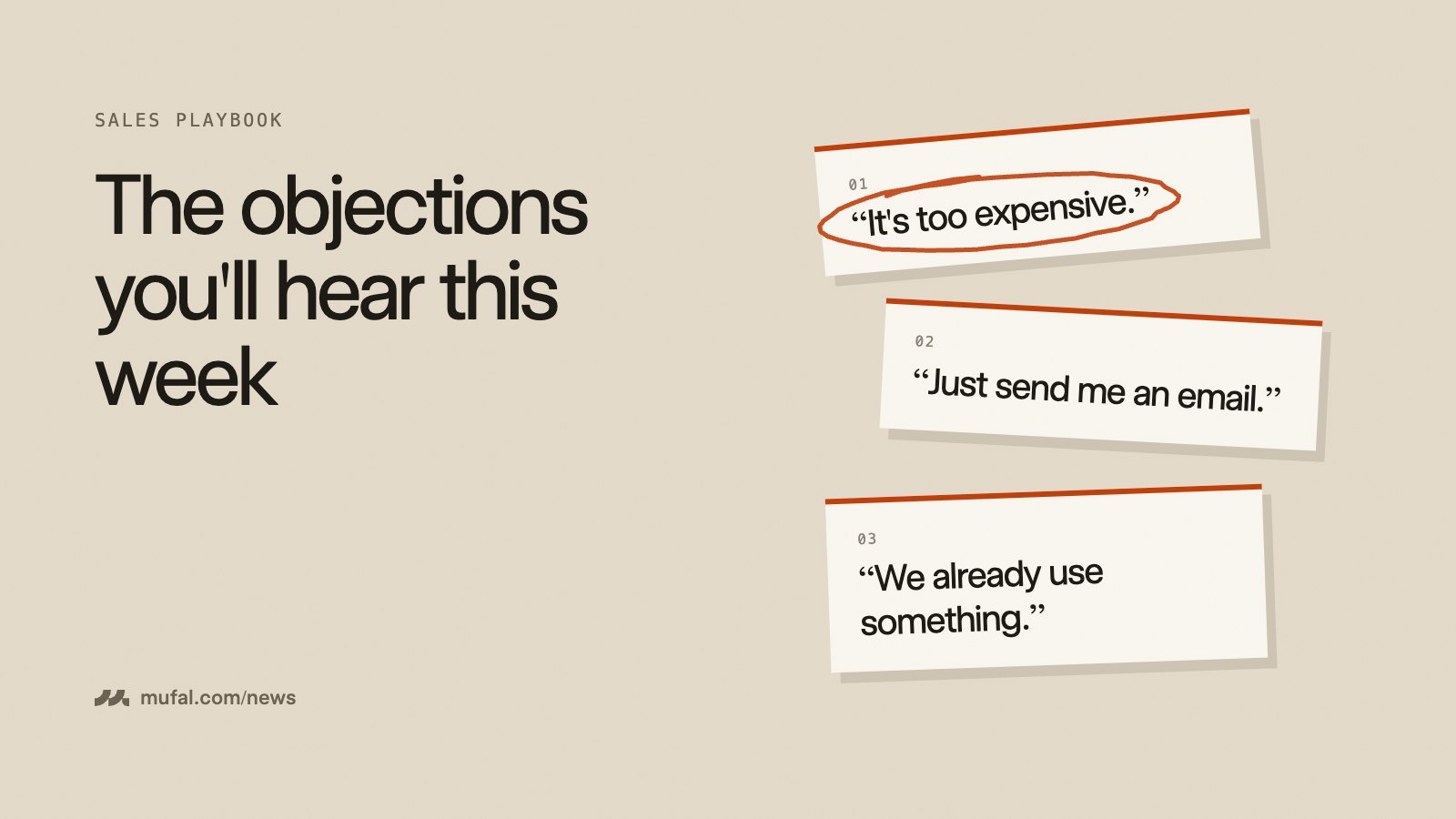
1. "It's too expensive."
Usually means: they cannot see enough value yet, or the timing of the spend is the issue, or they are comparing you to something cheaper.
Try: "Understood. Too expensive compared to what: another tool, doing it in-house, or the budget you had in mind?" Then answer that specific comparison, ideally with a number they gave you earlier in the call.
2. "Just send me an email."
Usually means: polite exit, or a genuine need to share with someone else.
Try: "Happy to. So I send something useful rather than a brochure: what would you need to see to bring this to your team?" If they cannot answer, it was an exit.
3. "We already use something for this."
Usually means: switching feels like work, and you have not shown a gap.
Try: "Makes sense. What do you like about it? And is there anything you've had to work around?" The workaround is your opening.
4. "Now isn't a good time."
Usually means: other priorities, or no urgency.
Try: "Fair. What is taking priority this quarter?" If it is related to your product, connect them. If not, agree on a specific date to come back, not "in a few months".
5. "I need to talk to my boss / team."
Usually means: they are not the decision maker, or they need help to sell it internally.
Try: "Of course. What do you think they'll ask first?" Then offer to join that conversation or give them a one-page summary that answers it.
6. "We don't have the budget."
Usually means: no budget line for this yet, which is different from no money.
Try: "When does planning for next period start, and who owns it?" A small pilot or a monthly plan can also fit an existing budget line.
7. "Your competitor is cheaper."
Try: "They might be. Which plan are you comparing?" Then compare like for like, including the things that are extra on the other side (seats, limits, add-ons). Never trash a competitor; be precise instead.
8. "I'm not sure it will work for us."
Try: "What would 'working' look like in the first month?" Turn the doubt into a test with a clear success criterion.
9. "We tried something like this and it didn't work."
Try: "What happened?" Listen fully. Then be honest about whether you would have the same problem.
10. "Let me think about it."
Try: "Sure. To help you think it through: what's the main thing you're unsure about?" Often there is one specific doubt you can resolve on the spot.
The hard part: remembering all this live
Knowing these responses is easy. Using them while a buyer is talking, and while you are also trying to remember the number they mentioned eight minutes ago, is the hard part.
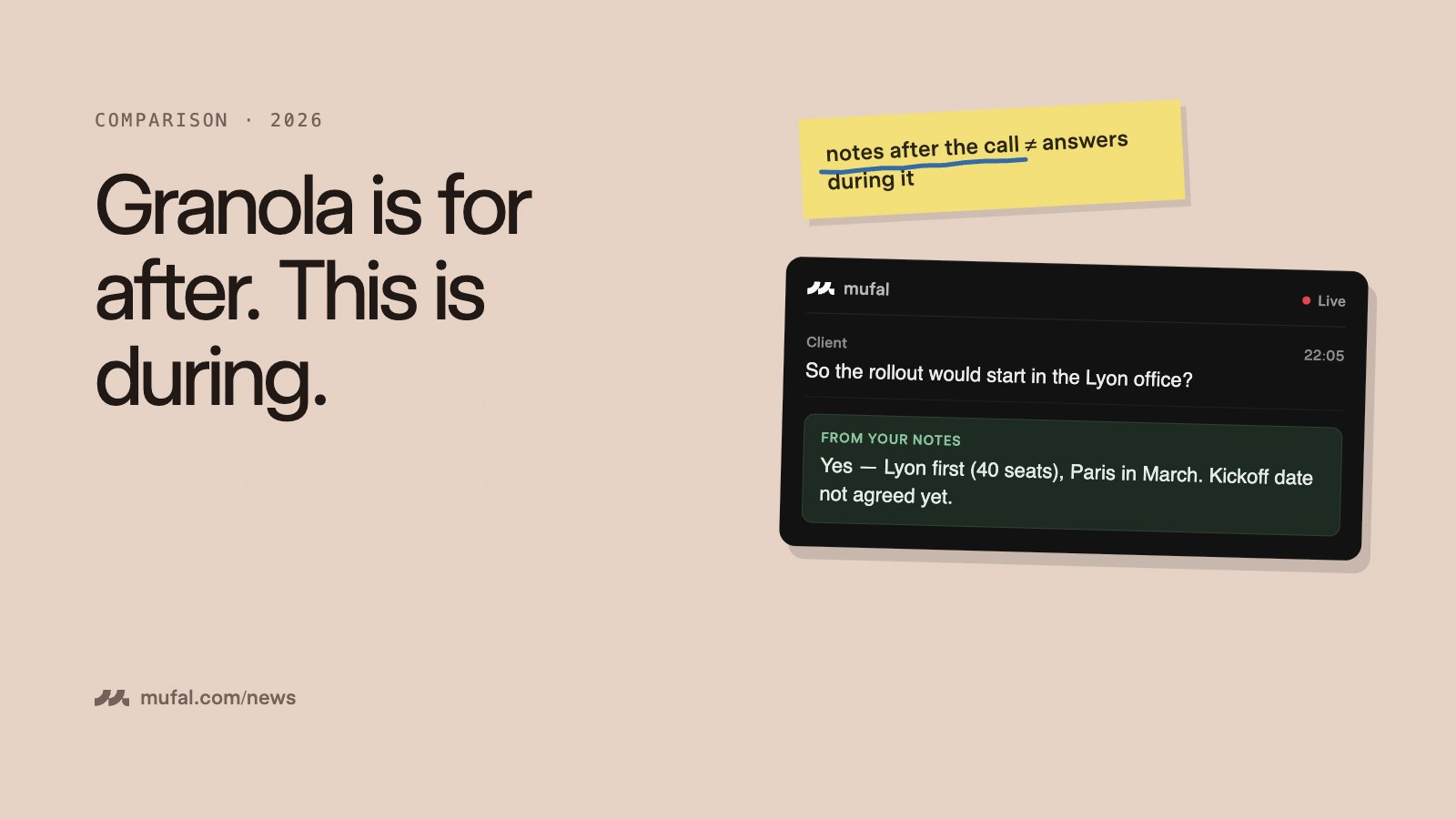
That is the problem we built Mufal for sales calls to solve. It transcribes the call from your desktop (no bot in the call, so tell the prospect you transcribe). When an objection lands, click Answer and it suggests a question or response based on what the buyer actually said, using your own pricing and product notes if you attached them. You stay in the conversation instead of scrolling through a battlecard.
For the broader playbook, read how to use an AI meeting copilot on sales calls. Or try it free on your next discovery call.