There's a version of enterprise AI that technically works but fails in practice. The AI understands the question. It accesses the right data. It has the correct answer. But the customer hangs up frustrated anyway, or the interaction takes three times longer than it should have.
This happens when AI is built for correctness without being built for conversation. At Mufal, we've spent years thinking about what makes the difference — and today we're sharing the principles behind our voice and chat platform.
Principle 1: Conversation is not Q&A
Most enterprise AI is fundamentally a Q&A machine. Ask a question, get an answer. But real conversations don't work that way. People interrupt themselves. They change their mind. They provide context halfway through. They assume you know things you don't.
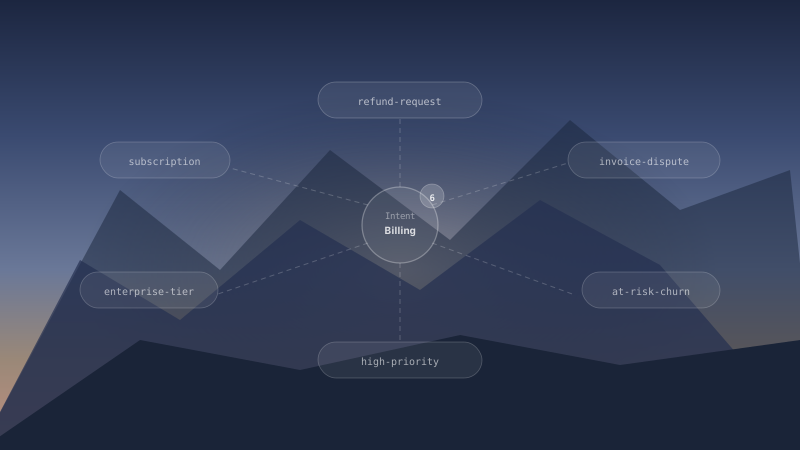
Mufal holds the entire context of an interaction in working memory — not just the last message, but the tone, the goals, the misunderstandings, the things the user almost said. Every response is shaped by everything that came before.
Principle 2: Silence is a design decision
When should the AI speak? When should it wait? When should it proactively offer something the user hasn't asked for yet? In human conversation, timing is everything. In AI, it's a design decision that most systems make badly — usually by filling every pause with words.
We've found that AI that knows when to stay quiet — that waits for a natural break rather than interrupting, that asks one clarifying question instead of three — achieves dramatically higher satisfaction scores and shorter handle times than AI that's optimized purely for speed.
Principle 3: Personality is a feature
Enterprise software has spent decades making itself as neutral as possible. No personality. No voice. Just function. We think that's wrong for AI that humans talk to.
Mufal's AI voices have consistent character — they're warm but efficient, direct but not terse, confident but not arrogant. This isn't cosmetic. Customers who interact with AI that has a coherent personality trust it more, engage more honestly, and escalate less.
Principle 4: Failure is a conversation
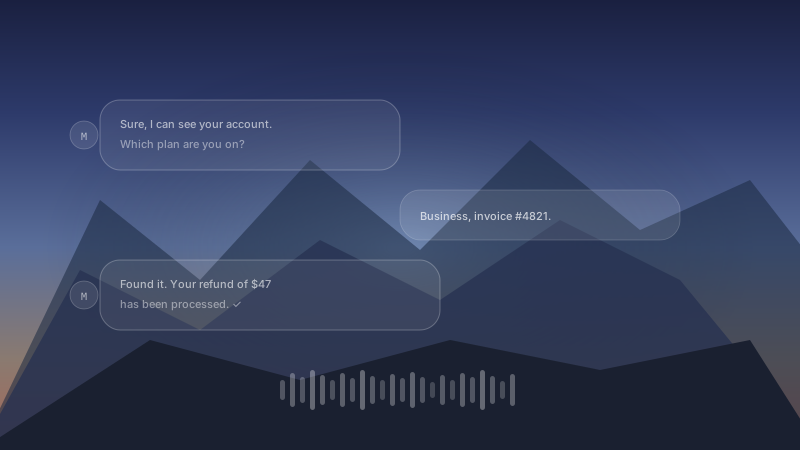
Every AI will sometimes fail to resolve an issue. The question is what it does next. Bad AI dead-ends: "I'm sorry, I can't help with that." Voice-first AI keeps the conversation alive: it explains what it can and can't do, offers alternatives, captures what the user needs so the handoff to a human is warm and complete.
We measure our failure handling as rigorously as our success handling, because customers remember how the hard moments went.