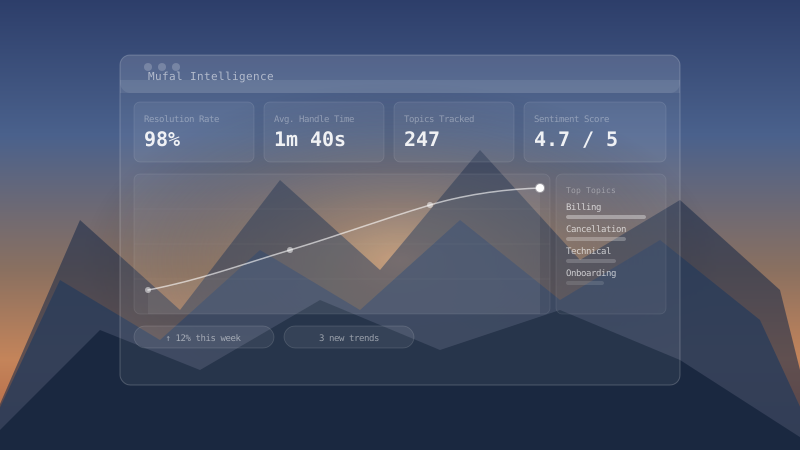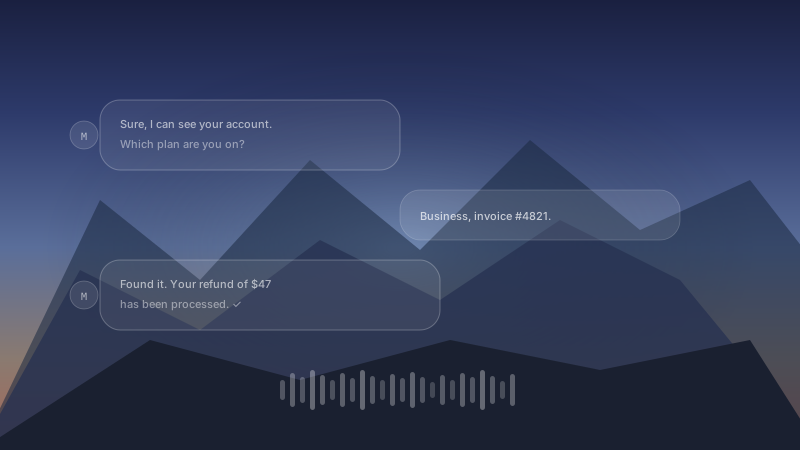
Enterprise AI at scale means thousands, sometimes millions, of conversations. And the question every ops team eventually asks is: what are all of these conversations actually about?
Today we're launching Intent Classification & Tagging — the infrastructure layer that brings structure to everything flowing through Mufal.
Intents: what the conversation is trying to do
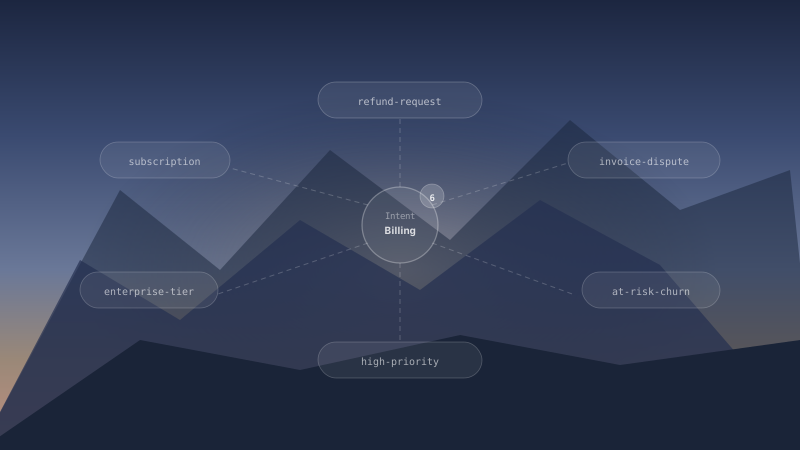
An Intent is a named outcome a conversation is working toward. "Process a refund." "Update billing information." "Cancel a subscription." "Report a technical issue." You define the intents that matter for your business, and Mufal automatically classifies every conversation in real time.
Intent classification unlocks powerful routing and automation. A conversation classified as "billing dispute" can be immediately given access to billing tools. One classified as "technical issue" can be routed to a specialized AI persona or a human expert. You set the rules; Mufal applies them instantly at scale.
Tags: the context layer
Tags are flexible labels that capture additional context about a conversation — sentiment, outcome, business unit, customer tier, product area. Unlike Intents, Tags can be applied in multiple combinations to a single conversation, and they can be added automatically by the AI or manually by your team during review.
Together, Intents and Tags make your conversation data queryable in ways that weren't possible before. "Show me all conversations tagged 'frustrated' that were classified under the 'cancellation' intent in the last 30 days, grouped by plan tier." That kind of query, which previously required hours of manual review, returns instantly.
Getting started
Intent Classification & Tagging is available in your Mufal workspace today. You can define your first set of intents in the Configuration panel, and we've pre-loaded a starter library of common intents based on usage patterns across our customer base to help you get running quickly.
Check out the documentation or reach out to your account team for a setup session.