
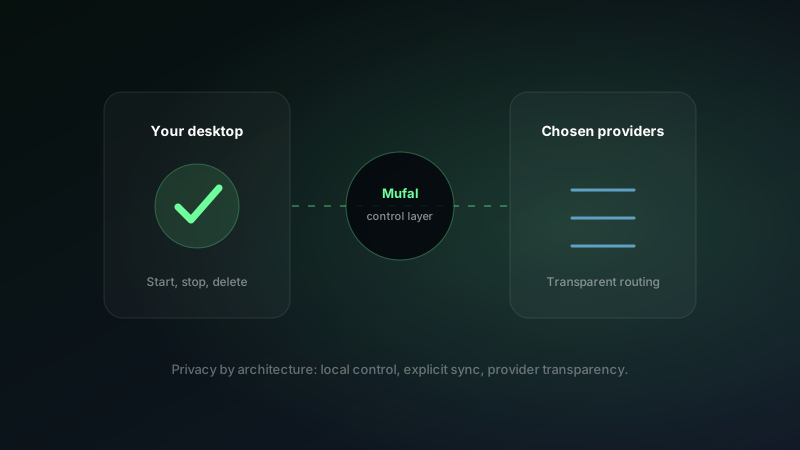
Every AI meeting assistant says it cares about privacy. The better question is whether privacy is enforced by architecture or promised by copy. In meeting software, that difference matters because conversations often include customer data, strategy, finances, hiring decisions, health information, legal issues, and product plans.
At Mufal, privacy-first means the product is designed so users understand where data goes and can choose the right level of convenience for the sensitivity of the conversation.
Local control comes first
A desktop copilot should behave like software you control. Mufal runs on your machine, starts only when you start a session, and lets you decide what to retain. The assistant is present for the user, not as a permanent observer of every call.
Provider transparency
AI assistants usually depend on speech-to-text and language models. Hiding that stack makes trust harder. Mufal exposes the architecture: transcription through AssemblyAI, language models through OpenRouter, with plan options for your own keys or included keys.
That transparency helps teams make informed decisions. Some calls need maximum convenience. Others need stricter account-level control. The product should support both.
Sync should be a choice
Cloud sync is useful. It makes history searchable across devices and keeps meeting notes available when you need them. But sync should be deliberate, not invisible. Mufal treats retained sessions and shared notes as user-controlled artifacts.
Privacy is also UX
Privacy features only work when people can understand them under pressure. Clear controls, visible session state, deletion paths, and plan-level explanations are part of the security model because they reduce mistakes.
That is the standard we are building toward: a meeting assistant powerful enough to help in real time, and clear enough that users know exactly what is happening.